One of the most common misconceptions about floor sanding is that the process is broadly the same whether you hire a machine from a tool hire shop or bring in a professional company. The equipment looks similar at a glance — a large drum sander, an edge sander, some abrasives — so it’s natural to assume the results will be comparable too.
They aren’t. The difference in equipment quality between a hired domestic machine and professional-grade floor sanding kit is significant, and it has a direct impact on the finished result.
The Problem With Hired Machines
Tool hire drum sanders are designed to be simple enough for an inexperienced user to operate without causing injury. That’s a reasonable goal, but it comes with a trade-off. The machines are heavy, the drum spins aggressively, and they remove material quickly and unevenly if not handled with confidence and experience.
The most common problem is drum marks — visible lines or ridges left across the floor where the machine has paused, been set down unevenly, or been moved too slowly. On a softwood floor like pine, which is relatively forgiving, these marks can sometimes be sanded out with finer grits. On a harder wood like oak, they can be very difficult to remove entirely and may still be visible in raking light once the finish goes on.
Hired machines also tend to vibrate more, which makes fine abrasive passes — the ones that prepare the floor for finishing — less controlled and less consistent.
Professional Machines: What’s Different
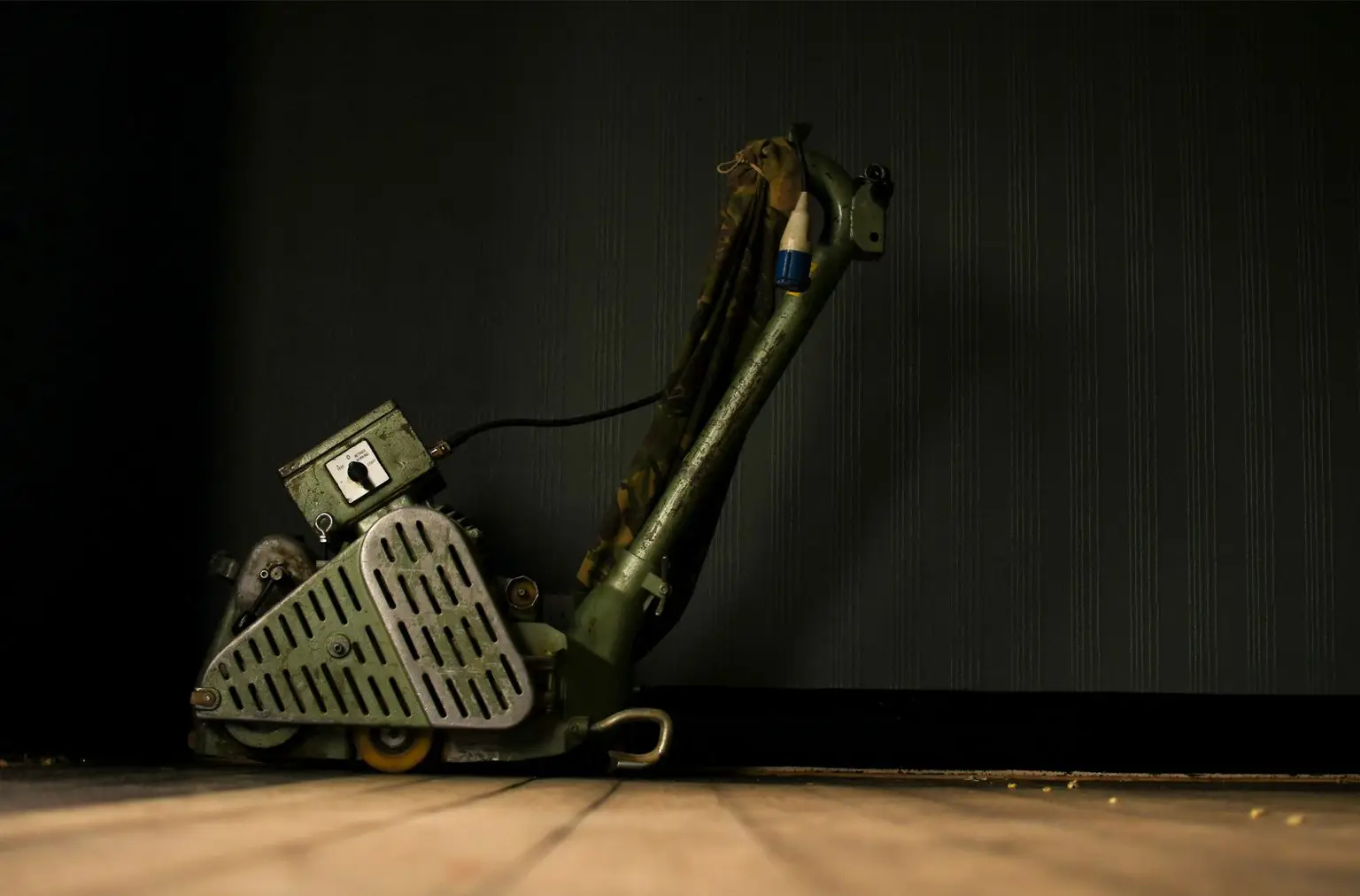
Professional floor sanding equipment is built for daily use on a wide range of floor types and conditions. The key differences are:
Better speed and power control — professional machines allow the operator to vary drum speed and feed rate precisely, which is critical when working on different wood species, aged floors, or parquet that requires sanding at multiple angles.
Superior abrasive systems — professional machines use a wider range of abrasive types and grits, and the abrasive changes are faster and more consistent. The way the abrasive meets the floor is also more controlled, reducing the risk of chatter marks and uneven removal.
Greater weight and stability — counterintuitively, heavier professional machines often produce a more controlled cut because they sit more consistently on the floor surface. Hired machines can bounce or lift slightly, particularly on uneven boards.
Edge sanders and detail tools — the edges and corners of a room can’t be reached by the main drum sander and are done with a separate edge sander. Professional edge sanders are significantly more controllable than the hired equivalent, which matters particularly close to skirting boards and in tight corners where any aggressive cut is immediately visible.
Dust Extraction: A Genuine Difference
Perhaps the most noticeable practical difference between hired and professional equipment is dust extraction.
Hired drum sanders produce a very large amount of fine wood dust. Most have a basic dust bag attached, but this captures only a fraction of what’s generated. The rest becomes airborne and settles throughout the house — in other rooms, in soft furnishings, in ventilation systems. Anyone who has sanded a floor with hired equipment will recognise the experience of finding fine dust in rooms three doors away two weeks later.
Professional dust-free sanding systems work differently. The extraction is integrated directly into the machine and pulls dust away at source before it becomes airborne, using a powerful vacuum unit that runs continuously during sanding. The result is dramatically less dust in the property — not zero, but a fraction of what a hired machine produces.
For occupied homes, for households with young children or anyone with respiratory sensitivities, and for properties where dust migration into other rooms would cause serious disruption, professional dust-free equipment makes a very significant practical difference.
Abrasive Quality and Progression
Professional floor sanders don’t just use better machines — they use better abrasives and more of them. A proper sanding job works through a carefully chosen sequence of grits, from coarse through to fine, with each pass refining the surface left by the previous one.
Cutting corners on abrasive progression — using too few grits, or skipping steps to save time — leaves scratch marks from coarser grits that show through the finish once it’s applied. This is particularly visible on floors finished with oil or hardwax oil, where the wood surface is more exposed than under a lacquer.
Using quality abrasives from reputable manufacturers also matters. Cheaper abrasives load up with dust more quickly, cut less cleanly, and can leave a less consistent surface.
What This Means in Practice
The practical upshot is straightforward. Professional equipment, used by someone with experience, produces a flatter, more consistent surface with fewer visible marks, less dust throughout the property, and a better foundation for the finish coats.
A finish applied over a well-prepared surface will look better, adhere more evenly, and last longer than the same finish applied over a floor prepared with inferior equipment.
This is a large part of why the results of professional floor sanding look so different from a DIY attempt, even when the same finish product is used. As we explored in our guide to DIY versus professional floor sanding, the equipment gap is one of the main reasons most homeowners conclude that going professional is the better investment — particularly for floors in main living areas or properties being prepared for sale or rental.
For a clearer picture of what professional floor sanding costs in Surrey, our 2026 pricing guide covers typical rates across different floor types and job sizes.
What to Ask a Floor Sanding Company
If you’re getting quotes from floor sanding companies, it’s worth asking directly what equipment they use. A company confident in its kit will be happy to tell you — and the answer will tell you a lot about the quality of finish you can expect.
Questions worth asking:
- Do you use dust-free extraction systems?
- What abrasive brands and grit progressions do you use?
- What finishing products do you work with?
- Can I see examples of recent work on a similar floor type?
At Surrey Wood Floor Sanding we use professional-grade equipment throughout, and we’re always happy to talk through our process in detail — either over the phone or during a free site visit.
We cover Reigate, Redhill, Dorking, Guildford, Epsom, and the wider Surrey area, as well as South London, Sussex, Hampshire, Kent, and Berkshire. Get in touch today to arrange your free assessment and quote.