
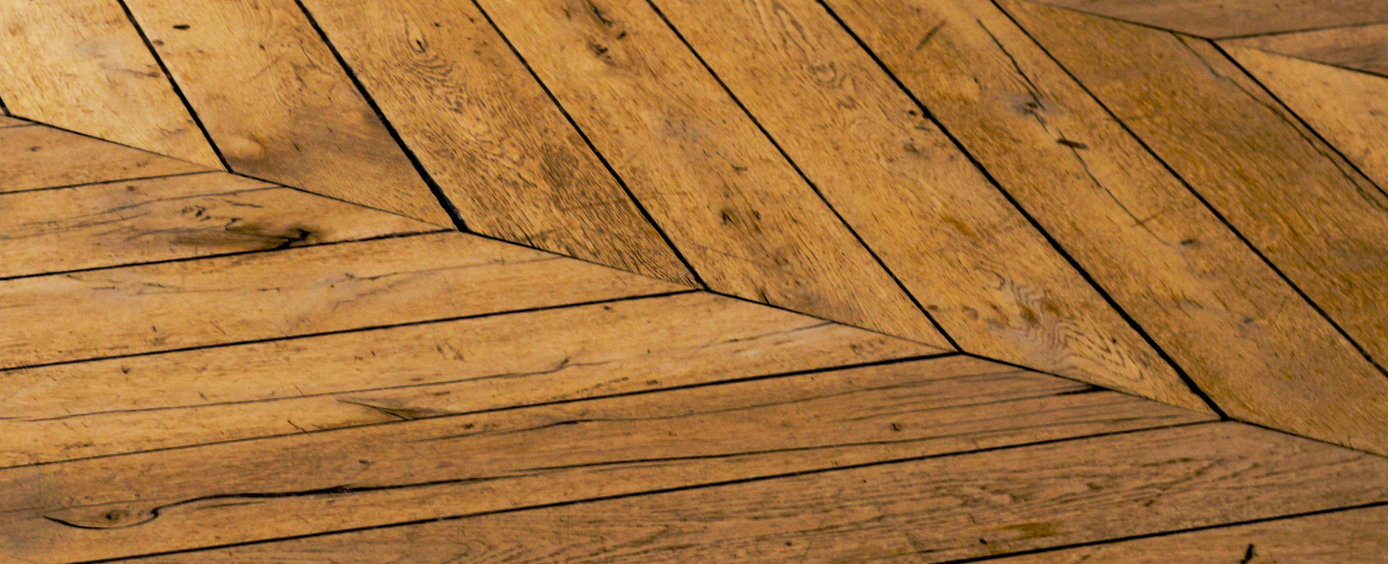
Parquet flooring is one of the most rewarding types of floor to restore. Whether it’s a herringbone hallway, a basket weave living room, or a solid block parquet that’s been covered under carpet for decades, the results of a quality restoration can be extraordinary.
What Is Parquet Flooring?
Parquet is a type of wood floor made up of small blocks or strips arranged in a geometric pattern. The most common pattern in UK homes is herringbone, but you’ll also find brick bond, basket weave, and various chevron designs. It was particularly popular in the mid-twentieth century, which means many properties in Surrey and South London have original parquet floors that are now 50 to 70 years old.
Older parquet is typically made from solid hardwoods — often oak, teak, or pitch pine — and is glued directly to the subfloor using a bitumen adhesive. This is important to understand because it affects how the floor can be sanded.
Common Problems With Older Parquet
Loose or lifting blocks — Bitumen adhesive deteriorates over time, and blocks can work loose, particularly at the edges of rooms or in areas with temperature and humidity fluctuations.
Cracked or missing blocks — Individual blocks can crack or be lost entirely over the years. Sourcing matching replacements is possible but requires some effort.
Cupping and movement — Parquet can be sensitive to moisture. If the subfloor has had any dampness, individual blocks may have lifted, cupped, or twisted.
Old surface finishes — Many original parquet floors were finished with wax polish, which can become deeply ingrained with dirt over decades. Others may have had layers of varnish applied over the years that have yellowed or flaked.
Bitumen bleed-through — On floors laid with bitumen adhesive, sanding too aggressively can cause the dark adhesive to bleed up into the surface of the wood. This requires careful sanding technique and sometimes the use of a stabilising primer before finishing.
The Restoration Process
Assessment
Before committing to a full restoration, it’s worth having the floor properly assessed. We’ll look at the overall condition, identify any loose or damaged blocks, check for moisture issues, and advise on whether the floor is a good candidate for sanding.
Repairs
Any loose blocks need to be re-adhered before sanding begins. Missing blocks should be replaced with matching timber where possible — we keep a selection of reclaimed blocks for this purpose. Gaps between blocks can also be filled using a flexible filler.
Sanding
Parquet sanding requires more care than straight-run board floors because the blocks run in multiple directions. Sanding against the grain tears the surface, so we typically sand at 45 degrees to the pattern first, then finish along the grain of each section.
Finishing
The same finish options apply to parquet as to other wood floors — lacquer, oil, or hardwax oil. In many cases, homeowners choose a natural oil or hardwax oil finish for parquet because it enhances the character of the wood and shows off the pattern beautifully.
Is It Worth Restoring?
Almost always, yes — particularly if the floor is solid hardwood. A quality parquet floor that’s been properly restored will outlast most alternatives and adds genuine value to a property. The cost of restoration is almost always significantly less than the cost of replacement, and original parquet simply cannot be replicated by modern engineered alternatives.
If you have a parquet floor that’s been covered up, damaged, or neglected, it’s almost certainly worth at least getting it assessed before writing it off.
Surrey Wood Floor Sanding has extensive experience restoring parquet floors across Surrey, South London, Sussex, Hampshire, and Kent. Get in touch for a free assessment and quote.