
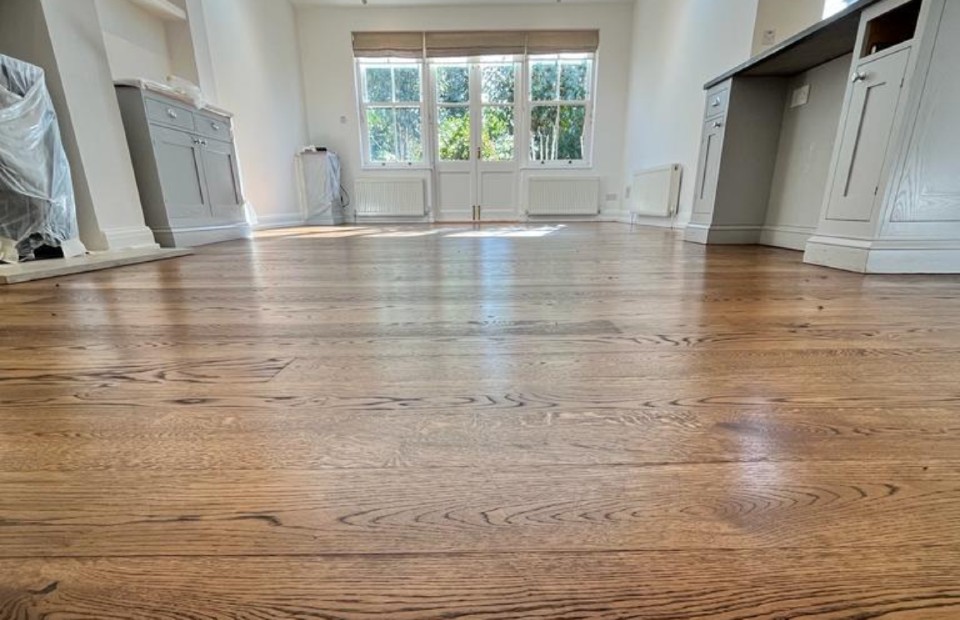
How Wood Floor Restoration Adds Value to Your Home
When homeowners think about adding value to their property, the conversation usually turns to kitchens, bathrooms, or extensions. Wood floor restoration rarely gets the same attention — but in terms of return on investment, impact on how a property presents, and the sheer transformation it can deliver, it deserves to be part of that conversation.
First Impressions and How Floors Shape Them
Walk into any property and the floor is one of the first things you register, even if you don’t consciously notice it. A tired, scratched, or dull floor sets a tone that’s difficult to overcome regardless of how well the rest of the room is presented. A clean, well-finished wood floor does the opposite — it lifts the entire space and signals that the property has been properly looked after.
Estate agents working across Surrey and South London consistently report that well-presented floors make a meaningful difference to how quickly a property sells and the level of interest it generates at viewings. First impressions in property are formed within seconds, and floors are a significant part of that.
The Numbers: Restoration Versus Replacement
Replacing a solid hardwood floor is expensive. Materials alone for a quality solid oak floor currently run at £50 to £100 per square metre or more, before fitting costs are added. For a typical living room and hallway, full replacement can easily reach £3,000 to £6,000 or beyond.
Professional sanding and restoration of the same floor costs a fraction of that. As outlined in our 2026 guide to wood floor sanding costs in Surrey, professional sanding and finishing typically runs at £25 to £45 per square metre for straight-run boards — a fraction of replacement cost, with results that in many cases are indistinguishable from new.
For a property owner weighing up how to spend a pre-sale budget, that’s a significant difference in outlay for a comparable visual result.
What Restoration Actually Delivers
A professional sand and refinish doesn’t just make a floor look better — it fundamentally changes the condition of the surface. Scratches, stains, dullness, and uneven colouring are removed. The wood is returned to bare grain and refinished with a quality product that will protect it for years to come.
The transformation is particularly dramatic on floors that have been neglected for a long time, or on original parquet and hardwood boards that have been covered under carpet. As we covered in our guide to parquet floor restoration, many Surrey properties have original mid-century parquet hidden beneath carpets that comes up extraordinarily well once uncovered and properly restored.
For buyers, a freshly restored floor reads as a quality feature rather than a maintenance liability. That perception has a direct effect on how a property is valued.
The Impact on Property Listings
The majority of property searches now begin online, which means the photographs in a listing are doing a significant amount of work before any viewer sets foot through the door. Wood floors photograph exceptionally well — they’re warm, they reflect light, and they make rooms feel larger and more considered than carpet or worn vinyl.
Professionally restored floors give listing photographs a quality that’s difficult to achieve by other means at a comparable cost. For sellers working with an estate agent or styling a property for sale, the floor is one of the most photographically impactful things in the room.
Specific Scenarios Where Restoration Adds Clear Value
Preparing a Property for Sale
This is perhaps the most straightforward case. A property with tired, scratched floors going to market against comparable homes with well-presented interiors is at a disadvantage. Restoration levels the playing field and in many cases tips it the other way.
The cost of a professional sand and refinish across a typical Surrey property — hallway, living room, and perhaps a bedroom — is modest relative to the asking price of the property. If it meaningfully affects the sale price or the speed of sale, the return on that investment is clear.
Landlords Preparing for a New Tenancy
For landlords, restored wood floors reduce ongoing maintenance costs and improve the quality of tenant they attract. A well-presented rental property lets more quickly and at a stronger rent than one with tired finishes.
As we explored in our landlord’s guide to wood floor sanding, the economics of restoration versus replacement in rental properties almost always favour restoration — and a lacquered finish in particular requires very little from tenants in terms of upkeep.
Period Properties and Character Homes
Original wood floors are a genuine selling point in period properties. Victorian and Edwardian homes across Surrey, Reigate, Redhill, and South London frequently have original pine or hardwood boards that form part of the character of the house.
Replacing these with modern alternatives — even quality ones — loses something that buyers of period properties actively seek out. Restoring them preserves and enhances a feature that contributes genuinely to the property’s appeal and value.
Open Plan Spaces
Open plan living areas are particularly sensitive to floor quality because the floor runs continuously across a large, visible area with no natural breaks to distract the eye. A worn or patchy floor in an open plan space reads badly throughout the whole room. A well-restored floor does the opposite — it ties the space together and makes it feel intentional and cohesive.
Does the Type of Wood Matter?
Yes, to a degree. Certain wood species carry more appeal in the current market than others.
Oak is consistently the most desirable species for buyers and tenants. Original oak boards or parquet in good condition are a genuine asset, and restoration of an oak floor almost always pays for itself in terms of perceived value.
Pine is very common in Victorian and Edwardian properties and, while less fashionable than oak, still presents well when properly restored. The warm, characterful appearance of sanded pine boards appeals strongly to buyers looking for period features.
Parquet — whether oak, teak, or other hardwoods — is increasingly sought after. The geometric patterns of herringbone and basket weave parquet have come back strongly in interior design terms, and an original restored parquet floor is a feature many buyers will actively seek out.
Engineered hardwood can also be restored in many cases, depending on the thickness of the wear layer, and presents just as well as solid wood once refinished.
The Finish Matters Too
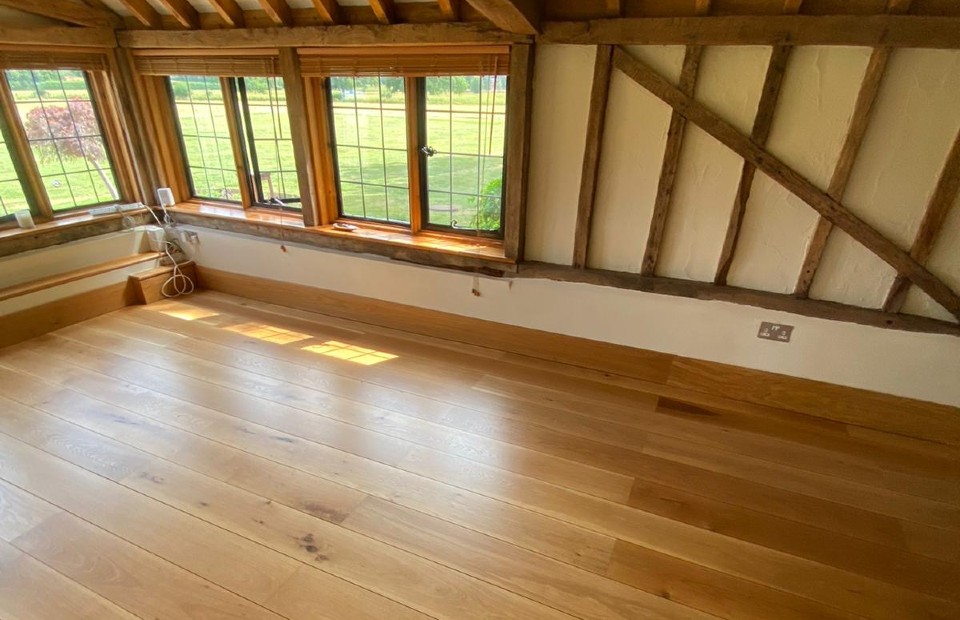
The choice of finish affects not just the appearance of the floor but how it will be perceived by potential buyers or tenants. As we covered in our guide to lacquer, oil, and hardwax oil finishes, each option has a different aesthetic character.
For properties going to market, a satin or matt lacquer tends to photograph well and appeals to the widest range of buyers. Oil and hardwax oil finishes have a warmer, more natural appearance that works particularly well in period properties and higher-end homes where the quality of materials is part of the appeal.
What About Floors in Poor Condition?
Floors that appear beyond saving are often better candidates for restoration than they look. Deep scratches, black water staining, old paint, and years of ingrained dirt can all be addressed by sanding — though it’s worth being realistic about what’s achievable with very severe damage.
As we discussed in our guide to how to tell if your floor needs sanding, grey and black water staining in particular can go deep into the wood and may not fully sand out. In these cases, staining the floor to an even colour after sanding is often a practical solution that still delivers an excellent result.
The key is getting an honest assessment before writing a floor off. In our experience, the majority of floors that homeowners assume need replacing are actually restorable — and the result of a good restoration will match or exceed what replacement would deliver, at a fraction of the cost.
A Worthwhile Investment at Almost Any Price Point
Whether you’re preparing a modest terrace for sale, restoring a period property, or refreshing a buy-to-let between tenancies, wood floor restoration consistently delivers a strong return relative to its cost. It’s one of the few home improvement investments where the outlay is modest, the transformation is immediate, and the impact on how the property presents is substantial.
Surrey Wood Floor Sanding works with homeowners, landlords, and estate agents across Surrey, South London, Sussex, Hampshire, Kent, and Berkshire. If you’d like an honest assessment of what your floors could look like — and what it would cost — get in touch today for a free site visit and quote.