
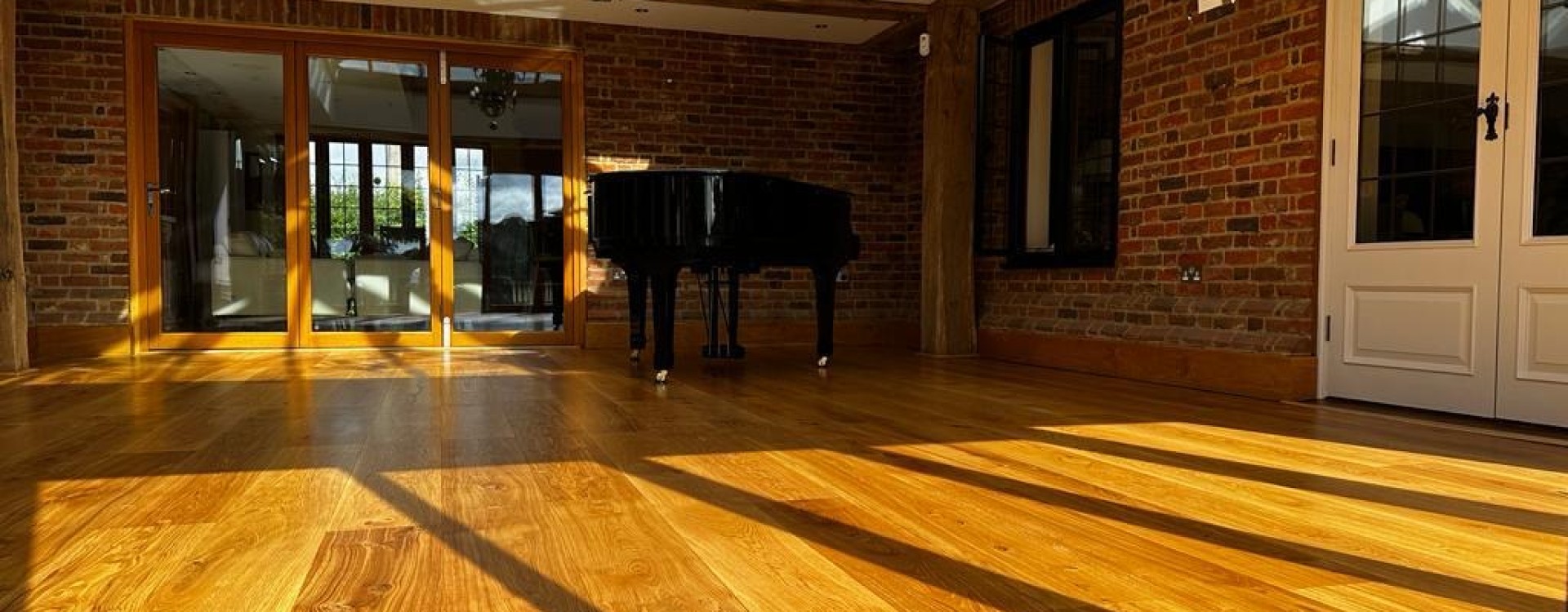
Many homeowners assume their floor needs a full sand when actually a deep clean or a maintenance coat would do the job just as well. Equally, some floors that look presentable on the surface are actually in worse condition than they appear. Here’s how to tell the difference.
What Does a Floor That Needs Sanding Actually Look Like?
Sanding removes the top layer of wood, along with any finish, staining, scratches, or damage embedded in the surface. It’s a significant process that rejuvenates the floor but also uses up a little of the wood’s thickness each time. Most solid wood floors can be sanded between five and ten times over their lifetime, so it’s worth only doing it when it’s genuinely needed.
Signs that your floor probably needs sanding:
- Deep scratches or gouges that have broken through the finish and into the wood itself
- Grey or black staining caused by water damage or pet urine soaking into the grain
- Uneven surfaces where boards have cupped, crowned, or settled at different heights
- Old finish that has completely worn through in heavy traffic areas, leaving bare wood exposed
- Persistent dullness that doesn’t respond to cleaning products
- A floor that hasn’t been sanded in 15 to 20 years and is showing its age
When a Clean or Maintenance Coat Might Be Enough
If your floor still has a reasonable finish on it but looks tired or dull, it may simply need refreshing rather than sanding. Options include:
- Screen and recoat — the surface is lightly abraded and a new coat of lacquer or oil is applied on top. This is much quicker and less disruptive than a full sand.
- Maintenance oil — if your floor has an oiled finish, a fresh coat of maintenance oil can restore its appearance and protection without any sanding at all.
- Deep cleaning — sometimes what looks like a worn floor is actually a build-up of old cleaning product residue. A professional clean can make a surprising difference.
The Grey Staining Question
Grey or black marks on wood floors are one of the most common things we’re asked about. They’re usually caused by water penetrating the floor — from a leak, a spillage that wasn’t wiped up, or moisture coming up from below.
Unfortunately, grey staining often goes deep into the wood and can’t always be fully removed by sanding. In some cases we can sand it back significantly and use a stain to even the colour out, but it’s important to manage expectations with water damage. We’ll always assess this honestly during a site visit.
What About Gaps Between Boards?
Gaps tend to open up over the winter months when central heating dries the air, and close again in summer. Small seasonal gaps are normal and don’t necessarily mean the floor needs sanding. However, if gaps are wide, consistent throughout the year, or causing draughts and noise, they can be filled as part of a sanding project using a flexible wood filler matched to the floor colour.
Not Sure? Get a Professional Opinion
If you’re in any doubt, the easiest thing to do is ask. We’re happy to visit properties across Surrey, South London, Sussex, Hampshire, and Kent to give an honest assessment of what your floor actually needs — without pushing for more work than is necessary.
Contact Surrey Wood Floor Sanding today for a free, no-obligation inspection and quote.